Window Shades for Large Windows: What Actually Works
A wall of glass is one of the best features a home can have, right up until the afternoon sun turns the room into an oven or the neighbors can see straight into your living room at night. Choosing window shades for large windows is a different job than covering a standard bedroom window. Width, weight, and how you raise and lower the shade all matter more when the glass gets big.
Key Takeaways
- Large windows are a width problem first. Every shade system has a maximum size, so wide openings are often covered with two or three shades that look like one.
- Cellular, solar, roller, and woven wood shades are the most practical choices for oversized glass.
- Heavy, wide shades are hard to lift by hand, which is why motorization makes the most sense on big windows.
- A professional measure prevents uneven gaps, light leaks, and shades that won’t fit the frame.
What Makes Large Windows Hard to Cover?
Large windows are hard to cover because size changes how a shade behaves. A wider shade is heavier, harder to lift evenly, and more likely to sag or rack if it isn’t built for the span. Big glass also lets in more heat, glare, and UV light, so the fabric you choose has to work harder than it would on a small window.
This is different from the challenge of tall windows, which is mostly about reach. (We’ve covered that in our post on motorized blinds for tall windows.) With wide picture windows, sliding glass walls, and rows of windows across a great room, the questions are usually:
- How many shades will it take to cover the opening cleanly?
- Will there be gaps between shades that let light through?
- Can a person comfortably raise a shade this size every day?
- How will the fabric hold up to years of direct sun?
Which Window Shades Work Best for Large Windows?
The best window shades for large windows are the ones that stay light, raise evenly, and handle sun well. Unlike blinds, which rely on rows of slats, shades are made from one continuous piece of fabric, so they cover wide glass with fewer lines and a softer look. For most Knoxville homes, that comes down to four shade styles, each with a different strength.
Cellular Shades
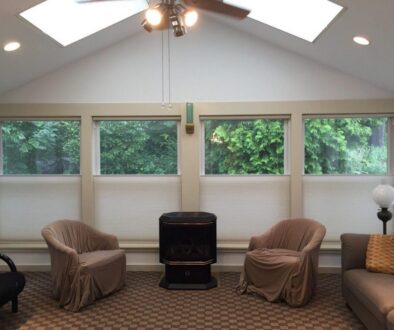
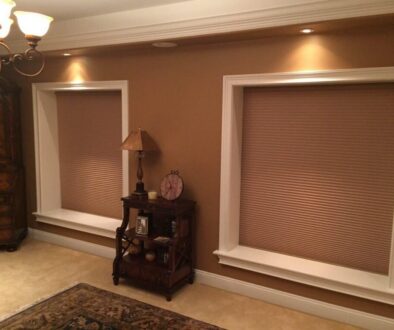
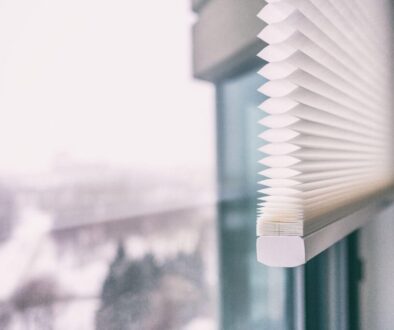
Cellular shades are lightweight for their size, which makes them one of the easiest shades to scale up. Their honeycomb pockets trap air, so they also help with the heat and cold that large panes let in. A top-down/bottom-up version lets you uncover the upper glass for daylight while keeping the lower half private.
Solar Shades
Solar shades are built for glare. Their woven screen fabric cuts brightness and UV exposure while keeping much of your view, which is why they’re a favorite for great rooms that face a mountain view or a backyard. If you want to learn more about how they work, our guide to solar window shades walks through openness levels and fabric colors.
Roller Shades
Roller shades have a clean, minimal look that suits modern rooms with big windows. They roll tight to the top of the window, so they nearly disappear when raised. Fabric choices range from light-filtering to room-darkening, and several rollers can be mounted side by side to cover a wide opening.
Woven Wood Shades
Woven wood shades bring natural texture to a large window without the bulk of heavy drapery. They work well in living rooms and sunrooms where you want warmth and filtered light more than total privacy.
Should You Use One Shade or Several?
On most large windows, several shades are the better choice. A single shade that’s too wide can be heavy, hard to lift, and more likely to hang unevenly. Splitting the opening into two or three shades keeps each one manageable and lets you raise only the section you need.
Where your window has mullions or separate panes, we usually line the shade breaks up with them so the gaps fall where the frame already blocks light. Some systems can also hang multiple shades on a single headrail, so the shades read as one continuous treatment when they’re lowered. The right setup depends on the product, the fabric, and the shape of your window, which is something we work out during your measure.
Inside Mount or Outside Mount?
An inside mount sits within the window frame for a tidy, built-in look. An outside mount sits on the wall or trim above the window and covers the full opening, which blocks more light around the edges and can make a window look even bigger.
For large windows, outside mounts are often the better fit when the frame is shallow, when you want better light blocking, or when the window isn’t perfectly square. Inside mounts work well when the frame has enough depth and you want to show off attractive trim.
Is Motorization Worth It on Large Windows?
Motorization is worth it on large windows more than anywhere else in the house. A wide shade takes real effort to raise by hand, and lifting several shades one at a time every morning gets old fast. With motorized shades, you can raise or lower a whole bank of windows at once with a remote, a wall switch, or a schedule.
Motorized shades also remove lift cords, which is a safety upgrade in homes with kids or pets, and they make it easy to close the shades during the hottest part of the afternoon even when no one is home. For a deeper look at options and power choices, see our motorized window treatments buyer’s guide.
Large Window Treatment Ideas for Common Rooms
A few large window treatment ideas that work well in East Tennessee homes:
- Great rooms with a view: solar shades in a darker fabric color, which tends to preserve the view better, motorized as a group.
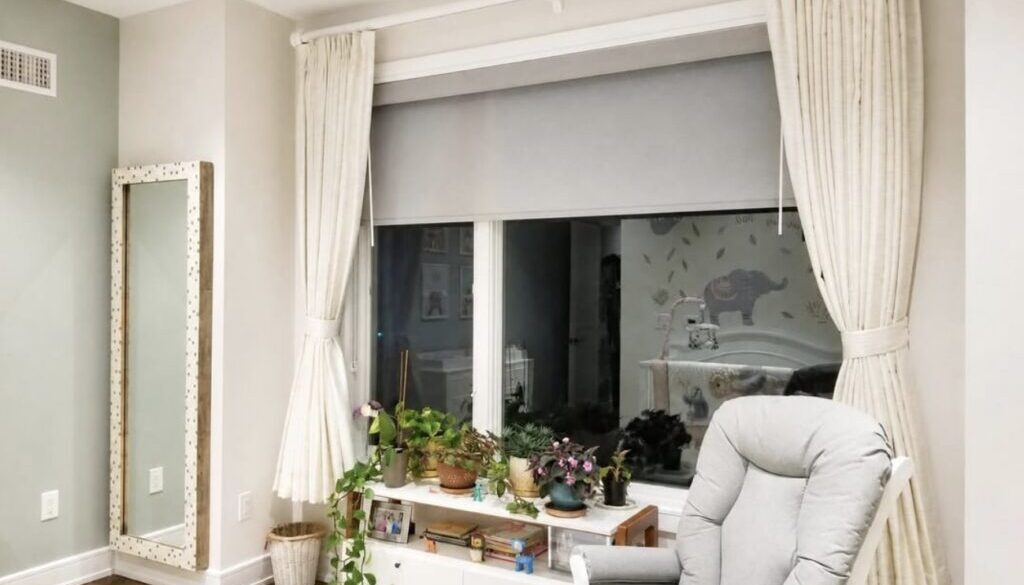
- Bedrooms with big windows: room-darkening cellular shades, or a light-filtering shade layered with custom draperies for full darkness.
- Sunrooms: cellular shades for temperature control, or woven wood for texture.
- Open kitchen and dining areas: roller shades for a clean look that’s easy to wipe down.
Frequently Asked Questions
What is the best shade for a very wide window?
For very wide windows, the best choice is usually two or more cellular, roller, or solar shades sized to the window’s sections. Splitting the opening keeps each shade light and easy to operate while still giving you a coordinated look.
Will there be gaps between multiple shades?
There will be small gaps between side-by-side shades, but careful planning keeps them minimal. Aligning the breaks with mullions or window frames hides most of them, and an outside mount can reduce light leaks around the edges.
Can I use blackout shades on a large window?
Yes. Room-darkening cellular and roller fabrics are available for large windows. Expect some light around the edges and between shades unless you add an outside mount, side channels, or layered draperies.
Do large window shades help with energy bills?
Shades that insulate, especially cellular shades, can help reduce heat gain in summer and heat loss in winter. Closing them during the hottest part of the day makes the biggest difference on west- and south-facing glass.
Get Shades That Fit Your Large Windows the First Time
Large windows leave little room for guesswork. A shade that’s a quarter inch off, or a fabric that can’t handle the afternoon sun, is easy to notice on a big pane of glass. At Knoxville Blinds & Shutters, we measure every window, bring samples to your home so you can see them in your own light, and recommend the setup that fits your windows and your routine.
Call us at 865-544-8339 or request your free in-home consultation to get started.